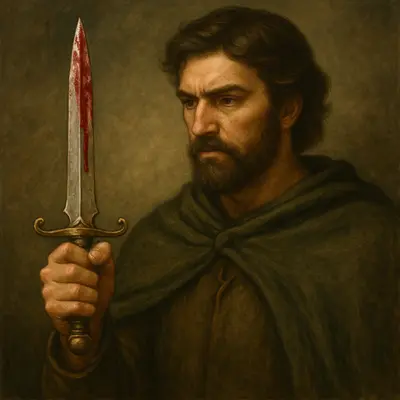
Macbeth: Act 5 – Long Q&A (10 Marks Each)
Ask Englicist AI about Macbeth
Need help with the summary, themes, meanings, quotes, grammar points, or exam-style answers for this topic? Open StudyMate and ask anything.
Answer within 200-250 words. Justify your viewpoint or explain by citing textual examples.
Q 1. Analyze the contrast between Lady Macbeth's and Macbeth's final states and what each reveals about how they cope with guilt.
Lady Macbeth and Macbeth respond very differently to the guilt created by their crimes. Lady Macbeth's response is emotional and psychological. She cannot suppress her conscience. Guilt manifests as sleepwalking. She tries to wash imagined bloodstains from her hands. Her famous words "Out, damned spot! Out, I say!" show her desperate attempt to remove guilt that cannot be removed. She eventually commits suicide, unable to bear the weight of her conscience. Lady Macbeth's fate shows that guilt cannot be denied or suppressed. It emerges forcefully from the unconscious mind. She has tried to be strong and ruthless. She has tried to remove her conscience. But conscience is inescapable. It destroys her.
Macbeth responds very differently. Rather than being destroyed by guilt, he becomes emotionally numb. He does not sleep or dream. He commits more murders to try to feel secure. By the end of the play, he is emotionally dead. When told that Lady Macbeth is dead, he responds with cold indifference: "She should have died hereafter." He does not grieve for his wife. He has separated himself from all human emotion.
Both paths lead to destruction, but through different mechanisms. Lady Macbeth is destroyed by her conscience. Macbeth is destroyed by the loss of his conscience. Lady Macbeth's breakdown shows that guilt has psychological power. Macbeth's numbness shows that avoiding grief through cruelty leads to emptiness. The play suggests that neither path allows escape from the consequences of evil. One destroys through feeling. The other destroys through not feeling. Both are tragic outcomes that show the inescapable consequences of murder.
Q 2. Discuss how Act 5 demonstrates that evil deeds produce consequences that cannot be controlled or escaped through further evil.
Q 3. Evaluate the role of the witches in Act 5 and determine whether their prophecies are inevitable or whether Macbeth's choices cause the outcomes.
The witches in Act 5 deliver prophecies that come true exactly as stated. Yet the manner of their fulfillment depends on human choices. This raises questions about whether the witches control fate or merely predict it. The answer appears to be that the witches predict probable outcomes based on human nature and circumstances. They do not force events. They predict what humans will likely do.
The prophecy "none of woman born shall harm Macbeth" is fulfilled when Macduff reveals he was born by caesarean section. This is not a magical consequence but a biological fact. The prophecy comes true because Macduff happens to have been born unnaturally and because he happens to be a skilled warrior who seeks revenge on Macbeth. These circumstances are not magically forced. They are human realities that existed before the prophecy was made.
Similarly, "Birnam Wood shall come to Dunsinane" is fulfilled through human action. Malcolm's soldiers decide to carry branches as camouflage. This decision is made by humans based on military strategy, not magic. The prophecy comes true because of this strategic decision.
The witches demonstrate power through language rather than through magical force. They deliver ambiguous prophecies that Macbeth misinterprets according to his desires. Their power lies in knowing human nature and predicting how humans will respond. The witches know that Macbeth will interpret the prophecies literally. They know he will feel false confidence. They predict what will happen based on this understanding of human psychology. The prophecies are true, but they are not miraculous. They reflect probable outcomes of human actions.
Q 4. Analyze Macbeth's famous "Tomorrow, and tomorrow, and tomorrow" soliloquy and explain how it represents the culmination of the play's themes.
Q 5. Discuss the significance of Malcolm's coronation at Scone and how it provides resolution and hope after Macbeth's tyranny.
Malcolm's coronation at Scone in Act 5 provides the play's emotional resolution. Scone is Scotland's traditional coronation site. By crowning Malcolm there, Shakespeare emphasizes that legitimate order has been restored. The chaos of Macbeth's reign has ended. Scotland will again be governed by legitimate authority. Malcolm's coronation is not merely a change of ruler. It is the restoration of righteousness and justice.
Throughout the play, Macbeth ruled through fear and murder. Malcolm, by contrast, promises to restore order and justice. He makes Scottish nobles earls, incorporating English customs into Scottish governance. He invites all his thanes to see him crowned at Scone. This inclusivity contrasts with Macbeth's paranoid isolation. Malcolm will rule through consent and loyalty rather than through fear and violence.
Malcolm's coronation also fulfills the witches' ultimate prophecy. Banquo's descendants will be kings. While the immediate crown goes to Malcolm, the prophecy suggests that Banquo's line will eventually rule both Scotland and England. Malcolm's association with the English king hints at this future unity.
The coronation provides hope that Scotland will heal. The country has suffered under Macbeth's tyranny. Ross describes a Scotland where "each new morn new widows howl, new orphans cry." Macbeth's rule has created immense suffering. Malcolm's restoration promises to end this suffering. Scotland will be restored to prosperity and peace. The coronation is not merely the end of one reign and the beginning of another. It is the triumph of good over evil, of justice over tyranny, of legitimate authority over usurped power. The play ends with hope that order and righteousness have been restored.
Q 6. Analyze the final battle and Macbeth's death as the ultimate consequence of his actions throughout the play.
The final battle in Act 5 brings Macbeth's tragedy to its culmination. He faces an enemy he cannot defeat—not because he lacks courage or martial skill, but because his own actions have united the forces against him. Macbeth fights bravely. He kills Young Siward. He does not surrender. Yet he faces an overwhelming force united in purpose. His own soldiers have lost faith. They flee rather than fight for him. Macbeth stands nearly alone as enemies close in from all sides.
Macbeth's final moments are particularly tragic. He confronts Macduff, confident in the witches' prophecy that he cannot be harmed by anyone "born of woman." He declares that he will not surrender to Malcolm or face mockery from common soldiers. He will die fighting to preserve his dignity. Yet when Macduff reveals he was born by caesarean section, Macbeth's confidence shatters. He realizes the prophecy is lost. Still, he refuses to surrender. He continues fighting. Macduff kills him in combat.
Macbeth's death represents the ultimate consequence of his crimes. He began as a brave and loyal general. His ambition and the witches' prophecies corrupted him. He committed murder after murder. Each crime was meant to secure his position, but each crime created new enemies. His paranoia led him to order atrocities. His cruelty united the Scottish nobles in opposition. His tyranny invited invasion from England. By Act 5, Macbeth has isolated himself so completely that he has no allies. He faces his death without support or hope. His death on the battlefield is not glorious. It is the inevitable end of a tyrant destroyed by his own evil deeds. Macduff carries his severed head to Malcolm as proof of his death. Macbeth is remembered not as a hero but as a tyrant defeated by legitimate forces.
Q 7. Examine how the play uses the contrast between prophecy and human interpretation to explore themes of fate, knowledge, and self-deception.
The play's exploration of prophecy is sophisticated. The witches deliver true prophecies, yet Macbeth misinterprets them. This gap between what is said and how it is understood reveals important truths about human nature and fate. Humans interpret information according to their desires and fears. Macbeth wants to believe he is invincible. So when the witches say "none of woman born" can harm him, he interprets it as an absolute guarantee of safety. He does not consider alternative interpretations. He does not question what the prophecy might mean. He simply accepts the interpretation that makes him feel secure.
This self-deception is precisely what the witches count on. Under Hecate's direction, they deliberately use ambiguous language to create false confidence. They know that Macbeth will interpret the prophecies literally. They predict that his misinterpretation will lead him to act in ways that ensure the prophecies come true. The witches do not force fate. They predict human behavior based on understanding how humans interpret information.
The play suggests that humans are vulnerable to self-deception when interpreting knowledge. Macbeth does not lack information. The witches have warned him to "beware Macduff." Yet Macbeth hears this warning but does not fear Macduff deeply enough. He hears the prophecy that Birnam Wood will come to Dunsinane but does not imagine soldiers carrying branches. His mind cannot conceive of literal interpretations because his fear focuses on other threats.
The gap between knowledge and understanding is crucial. The prophecies contain true information about future events. Yet Macbeth's understanding of that information is flawed. He knows the prophecies but does not truly understand them. This gap between knowledge and understanding is what leads to his downfall. The play teaches that it is not enough to know something. You must understand its full implications. Macbeth's tragedy is not that he lacked information. It is that he misunderstood the information he possessed. His self-deception—his willingness to believe what he wanted to believe—sealed his fate.
Q 8. Discuss the play's final vision of order and justice restored and explain how Malcolm represents hope for Scotland's future.
Ask Englicist AI about Macbeth
Need help with the summary, themes, meanings, quotes, grammar points, or exam-style answers for this topic? Open StudyMate and ask anything.
Portions of this article were developed with the assistance of AI tools and have been carefully reviewed, verified and edited by Jayanta Kumar Maity, M.A. in English, Editor & Co-Founder of Englicist.
We are committed to accuracy and clarity. If you notice any errors or have suggestions for improvement, please let us know.