Macbeth Act III Scene 3 Summary
Ask Englicist AI about Macbeth
Need help with the summary, themes, meanings, quotes, grammar points, or exam-style answers for this topic? Open StudyMate and ask anything.
Plot Summary / Story-line
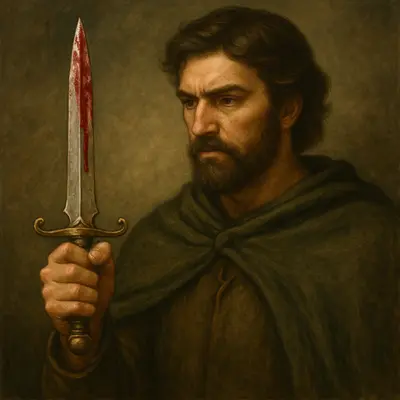
As dusk approaches, two murderers—joined by a mysterious third—wait in ambush on a wooded path outside the palace. Banquo and his son Fleance arrive on horseback and dismount to walk. The murderers strike suddenly.
Despite his age, Banquo fights back fiercely, dying with heroic words: "Fly, good Fleance, fly, fly, fly! / Thou mayst revenge—O slave!" His dying exhortation urges Fleance both to escape and to avenge his death. In the darkness created when one murderer extinguishes their torch, Fleance manages to flee. The murderers recover Banquo's body and exit, leaving Fleance's fate uncertain.
Commentary on Act III, Scene iii
This violent scene represents the tragic consequences of Macbeth's paranoia and ambition. Banquo's death—his murder by assassins rather than honorable combat—emphasizes the play's moral corruption.
Banquo's dying words are particularly significant: his instruction to Fleance to "revenge" his death sets up the play's ultimate resolution while also highlighting that Macbeth cannot escape fate through violence. The providential escape of Fleance—a seemingly minor detail—becomes monumentally important, as it prevents Macbeth from achieving his objective and illustrates the futility of attempting to circumvent the witches' prophecies.
The third murderer, whose identity remains unknown, has sparked scholarly debate; some scholars suggest he may be Macbeth himself or a spy ensuring the deed's completion. This ambiguity reinforces the atmosphere of paranoia and hidden violence. The scene's darkness serves as both literal setting and metaphor for moral darkness—evil operating in secrecy and shadow.
Ask Englicist AI about Macbeth
Need help with the summary, themes, meanings, quotes, grammar points, or exam-style answers for this topic? Open StudyMate and ask anything.
Portions of this article were developed with the assistance of AI tools and have been carefully reviewed, verified and edited by Jayanta Kumar Maity, M.A. in English, Editor & Co-Founder of Englicist.
We are committed to accuracy and clarity. If you notice any errors or have suggestions for improvement, please let us know.