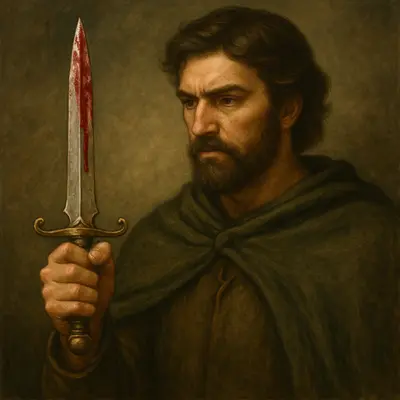
Macbeth Act IV Scene 1 Summary
Ask Englicist AI about Macbeth
Need help with the summary, themes, meanings, quotes, grammar points, or exam-style answers for this topic? Open StudyMate and ask anything.
Plot Summary / Story-line
In a dark, supernatural cavern, a bubbling cauldron hisses ominously as the three witches appear, chanting and adding grotesque ingredients to their magical brew: "eye of newt and toe of frog, / Wool of bat and tongue of dog." Hecate materializes and compliments their work. One witch chants the famous line: "By the pricking of my thumbs, / Something wicked this way comes," and Macbeth enters.
Desperate for reassurance, Macbeth demands that the witches reveal the truth of their prophecies. To answer his questions, the witches summon three apparitions. First, an armed head floats before them, warning Macbeth to "Beware Macduff." Macbeth dismisses this warning, claiming he already suspected Macduff. Second, a bloody child appears and proclaims: "None of woman born / Shall harm Macbeth," offering false comfort. Third, a child crowned and holding a tree branch assures him that he is safe "till Birnam Wood / To high Dunsinane Hill / Shall come against him." Finally, a procession of eight crowned kings passes, the eighth carrying a mirror, with Banquo's ghost pointing at them. Macbeth demands to know the meaning of this vision, but the witches perform a mad dance and vanish.
Lennox enters with news that Macduff has fled to England. Enraged, Macbeth vows immediate action: he will dispatch murderers to seize Macduff's castle and slaughter his family, determining that "from this moment, the very firstlings of my heart shall be / The firstlings of my hand."
Commentary on Act IV, Scene i
This scene represents the apex of the witches' malevolent influence and marks Macbeth's complete moral dissolution. The apparitions are brilliantly constructed to give Macbeth false confidence while actually foreshadowing his doom.
The first apparition's warning about Macduff seems to confirm Macbeth's existing suspicions, making the prophecy appear reassuring. The second apparition's declaration that no man "of woman born" can harm him seems to guarantee his safety—until the revelation that Macduff was delivered by caesarean section. The third apparition (Birnam Wood moving to Dunsinane) appears literally impossible, yet it occurs through the stratagem of soldiers carrying tree branches. The procession of kings—all descended from Banquo—fulfills the witches' original prophecy that Banquo's line will eventually rule, while the mirror held by the final king may symbolize King James I (Shakespeare's patron), who claimed descent from Banquo. These visions exemplify how prophecy operates in the play: not through direct falsehood, but through the hearer's misinterpretation and limited imagination.
Macbeth's response to these prophecies reveals his complete moral degradation. Rather than reflecting on the warning about Macduff, he immediately resolves to preemptively murder Macduff's entire family—an act motivated by pure malevolence rather than political necessity. His declaration that "from this moment, the very firstlings of my heart shall be / The firstlings of my hand" marks his final surrender to tyranny. He will no longer deliberate or hesitate; every murderous impulse will be immediately acted upon. This scene thus portrays both the witches' cynical manipulation and Macbeth's voluntary embrace of evil.
Ask Englicist AI about Macbeth
Need help with the summary, themes, meanings, quotes, grammar points, or exam-style answers for this topic? Open StudyMate and ask anything.
Portions of this article were developed with the assistance of AI tools and have been carefully reviewed, verified and edited by Jayanta Kumar Maity, M.A. in English, Editor & Co-Founder of Englicist.
We are committed to accuracy and clarity. If you notice any errors or have suggestions for improvement, please let us know.